8.9
10
Album Cover courtesy of Floyds Row
Rhythm Reviews: The Nostalgic Sounds of Floyds Row’s The Carlisle Sessions
The Carlisle Sessions have a genuinely revitalising quality. There is music that can be made for the next, and the next.
3 October 2026
Floyds Row's five-track EP incorporates traditional folk, early music, classical influences, and old-world tales into a recording that seems incredibly alive, looking back without feeling trapped in the past.
The way Floyds Row treats these tunes as more than just historical objects is what makes the endeavour particularly captivating. The performances are cosy, personal, and full of movement, but the tunes bear the weight of decades. The Carlisle Sessions feels like opening a door into another age and finding that the music still has so much to say, from ballads and melodies to stories of Robin Hood and forgotten figures.

Folk music has always been about sharing stories, and Floyds Row is well aware of this legacy. A sincere passion for storytelling lies at the core of their endeavour. The songs provide stories about history, adventure, and folklore, but the performances never feel like intellectual exercises.
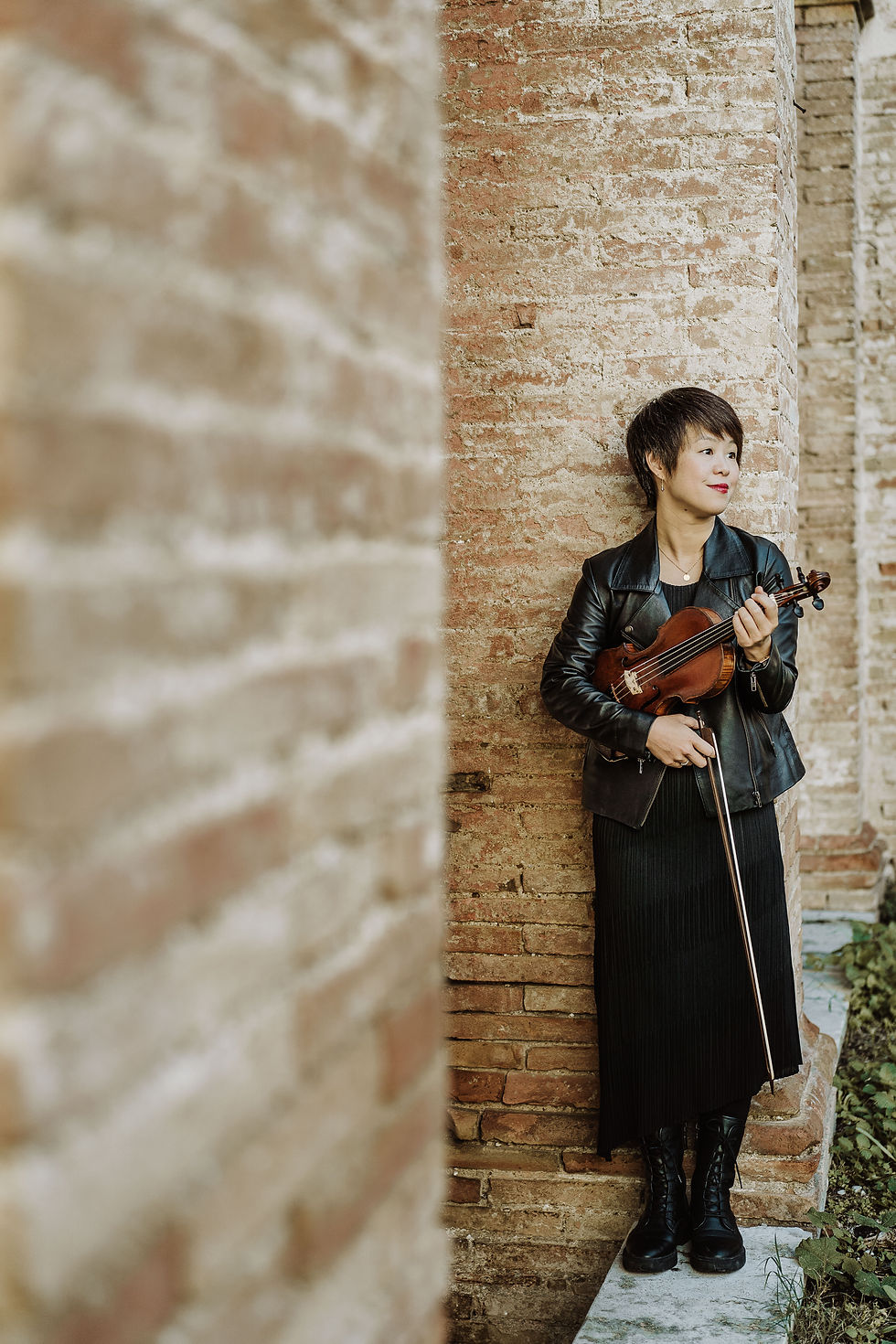
The best thing about the EP is its tremendously detailed sound environment produced by the combination of violin, accordion, cittern, guitar, mandolin, viola da gamba, double bass, and percussion. There is an attempt to manufacture. The instruments themselves naturally create the atmosphere.
One of the record's major focal areas is Emily Noël's soprano. Her voice's warmth and purity complement the material's historical tone flawlessly. Her restraint is what really sticks out. Noël puts the narrative first rather than using each song as a chance for vocal fireworks. This choice adds a level of intimacy to the performances that is especially significant in folk music.
The ensemble itself deserves equal credit. Asako Takeuchi's violin brings elegance and movement, while George Lykogiannis' accordion adds warmth and character. Chris Ferebee's work across cittern, guitar and mandolin provides much of the project's instrumental identity, while Andrew Arceci's viola da gamba and double bass give the arrangements depth. George Lernis' percussion adds rhythmic colour without overpowering the more delicate instrumentation.
There is a real sense of conversation between these musicians. Nothing feels like it has been added simply to fill space. Instruments appear, disappear and interact with one another naturally, allowing the arrangements to remain detailed without becoming crowded. That kind of restraint is easy to overlook, but it is one of the reasons the EP feels so cohesive.
Perhaps the most interesting aspect of The Carlisle Sessions is the way Floyds Row approach authenticity. There is always a danger when contemporary musicians revisit historical music that the result can feel overly polished, theatrical or disconnected from the source material. Floyds Row avoid that trap. Their performances sound studied, but never sterile; carefully arranged, but never lifeless.

The production follows the same philosophy. There is enough clarity for every instrument to be appreciated, yet the recordings retain an organic quality. You can almost imagine the musicians occupying the same room, responding to one another in real time. That physicality gives the EP a warmth that can sometimes disappear from heavily processed modern recordings.

And then there is the sheer imagination of the project. Listening to The Carlisle Sessions feels less like putting on a conventional folk EP and more like opening a forgotten book of stories. One moment you're surrounded by medieval imagery; the next, you're following a traditional ballad or a dance tune across centuries of musical history. The EP creates its own little universe, and that is where Floyds Row are at their most compelling.
The inclusion of The Song Of Robin Hood & His Huntes-men, composed by Chris Ferebee using text from a 19th-century collection of Robin Hood ballads, is particularly effective in demonstrating the ensemble's philosophy. It creates a bridge between historical material and new composition, suggesting that preserving musical history doesn't necessarily mean leaving it untouched.
What makes this particularly relevant today is the EP's refusal to treat traditional music as something belonging exclusively to another generation. Floyds Row understand that the emotions contained within these songs haven't become outdated. Stories about courage, love, conflict, adventure, loss and community still resonate because the people experiencing them haven't changed as much as we might think.
There is also something quietly rebellious about making music like this now. In an industry increasingly obsessed with short attention spans and instant gratification, The Carlisle Sessions asks the listener to slow down. It doesn't demand attention through volume or spectacle. Instead, it rewards patience.

That won't necessarily make this an EP for everyone, and that's okay. This is music that asks you to meet it halfway. If you're looking for a conventional modern folk record built around obvious hooks, this probably isn't it. But if you're willing to spend some time with the arrangements and let the stories unfold, there is plenty here to discover.
For Chaotic Rhythm, that's ultimately what makes The Carlisle Sessions worth talking about. It isn't simply a collection of old songs performed beautifully. It is an argument for why these songs still matter.
Floyds Row have taken music that could easily have been left behind in archives and historical collections and given it a living, breathing presence. They respect where these pieces came from without becoming overly precious about them, and they understand that tradition survives not by remaining frozen, but by being shared, performed and reinterpreted.
The Verdict:
The Carlisle Sessions is an atmospheric, beautifully performed and deeply considered collection that turns forgotten musical history into something immediate and human. Floyds Row prove that traditional folk doesn't need to be modernised to remain relevant. Sometimes, it just needs the right musicians to remind us why it mattered in the first place.
Read our Floyds Row Artist Spotlight