


Photo- Floyds Row
Floyds Row are bringing back the forgotten folk traditions
Floyds Row have built its identity around taking old ballads, historical melodies and traditional musical forms and finding ways to make them feel alive in the present.
4 October 2026
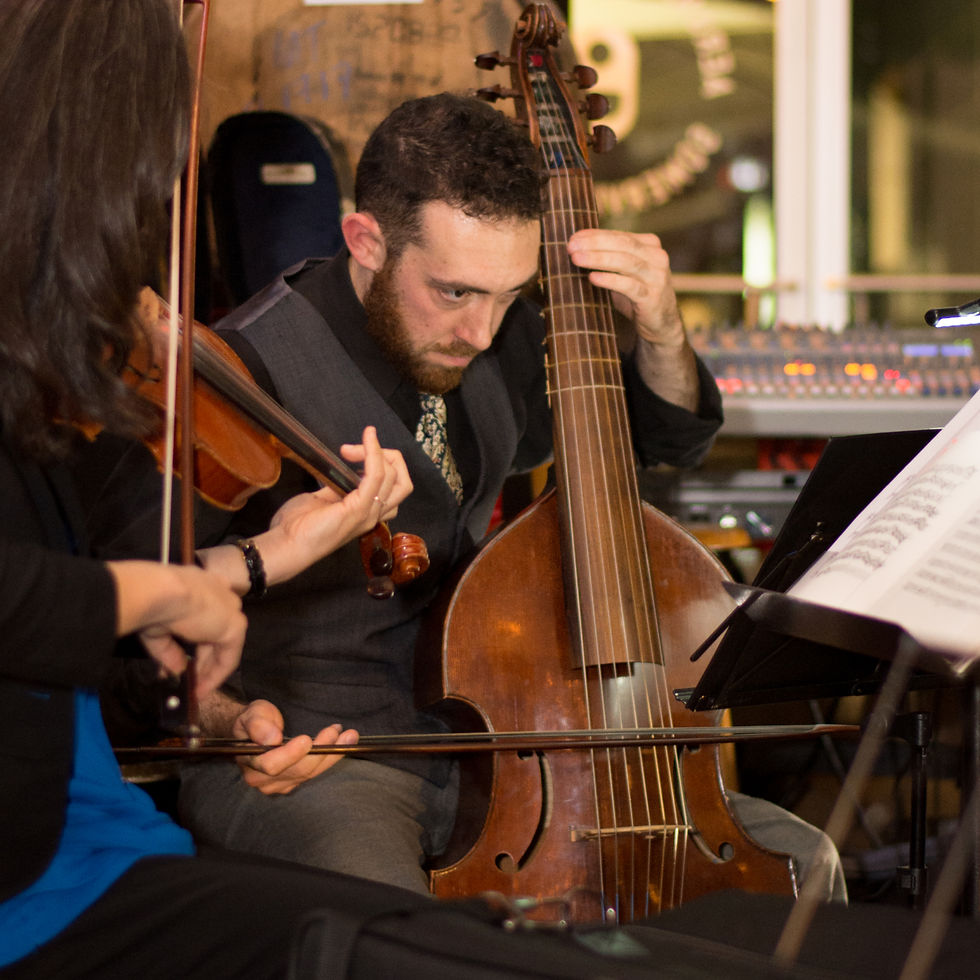
Formed through a series of concerts at the University of Oxford, Floyds Row grew from collaborations between musicians with backgrounds stretching across early music, contemporary classical, rock, jazz, folk and other traditions. That mixture has become central to the group's sound. Their instrumentation alone tells part of the story: soprano, violin, accordion, cittern, guitar, mandolin, viola da gamba, upright bass and percussion come together in a combination that is anything but conventional.

The group's latest release, The Carlisle Sessions, captures that philosophy particularly well. Rather than treating traditional material as something that belongs exclusively to another century, Floyds Row approach these songs with curiosity and a willingness to experiment.
Historical material sits alongside folk, classical, newgrass and influences from different musical traditions, creating something that feels less like a historical reconstruction and more like a conversation between different eras.
That sense of curiosity is central to what Floyds Row do. As Andrew Arceci explains, the group isn't really an early music ensemble, even though historical material is an important part of its repertoire.
The musicians bring their own backgrounds and musical instincts to the material, allowing the arrangements to develop naturally rather than forcing everything into a particular historical framework.

For violinist Asako Takeuchi, that process is less about consciously separating the historical from the contemporary and more about following what sounds right. The group experiments until a tune feels natural, allowing the music itself to determine where an arrangement should go.
That approach gives Floyds Row's performances a sense of spontaneity that can sometimes be missing from music built around historical repertoire.
There is also a deeper connection to research behind the group's work. Floyds Row regularly search for old, forgotten and obscure pieces, bringing together musicians who share an appreciation for traditional ballads and tunes that might otherwise disappear from contemporary musical culture.
Their goal isn't simply to preserve these pieces exactly as they found them. It's to inhabit them again.
There is a difference between preserving an old song and making somebody in 2026 actually want to listen to it. Floyds Row are interested in the second challenge.
Their music asks what happens when musicians take something centuries old, understand where it came from and then allow their own experiences to become part of its next chapter.
The ensemble's unusual instrumentation plays a huge role in that process. Each instrument brings its own colour and texture, but the combination is what makes Floyds Row immediately distinctive.
The viola da gamba can provide an unmistakably historical character, while violin, accordion, guitar, mandolin and percussion can push the music into more contemporary territory.

Percussionist George Lernis brings another important dimension to the group. Growing up in the Middle East before moving to the United States, Lernis developed a musical vocabulary shaped by both his heritage and his later studies at Berklee College of Music. His approach to percussion allows elements of Middle Eastern rhythm and traditional musical practices to enter Floyds Row's arrangements without feeling forced. Instead, those influences become another colour in the ensemble.
That willingness to let different traditions collide is perhaps one of the most interesting things about Floyds Row. Their music doesn't seem particularly interested in drawing rigid boundaries between folk, classical or early music. A historical melody can become the starting point for something completely unexpected, while an unusual instrumental combination can make an old tune sound strangely new.
One of the best examples on The Carlisle Sessions is “Maiden Lane / Kettle Drum,” a track that developed through experimentation during the recording process. For Arceci, the arrangement was particularly rewarding because of the energy that gradually emerged from it, including a percussion solo that became one of the track's defining moments.
That sense of experimentation was also present in the recording studio.

Producer and engineer Mac Ritchey took an intentionally organic approach to The Carlisle Sessions. Rather than separating the musicians through headphones and isolation booths, the ensemble was recorded together in an open-air control-room environment. The idea was simple: capture the musicians playing together rather than trying to manufacture the feeling of a live ensemble later.
That philosophy extended into the mixing process. Rather than stripping away every trace of interaction between the instruments, Ritchey embraced elements such as microphone bleed, allowing the sound of one instrument to naturally spill into another. The result is a recording approach that feels intimate and human.
These aren't songs designed to sound clinically perfect. They're pieces built around musicians responding to one another in real time. The laughter, conversation and energy of the sessions become part of the recording's character. When musicians are genuinely enjoying the process, that feeling can make its way into the music.
That human element is ultimately what makes Floyds Row more interesting than simply describing them as a "traditional folk" group. Their music is about connection: between musicians, between cultures, between centuries and between old material and new interpretations.

Their story began with The Oxford Sessions, the ensemble's debut recording, which emerged from those early University of Oxford collaborations. The record introduced listeners to the group's ability to move between historical repertoire and different musical traditions without becoming trapped by any single genre.

The response to that first record highlighted exactly what would become central to the band's identity: haunting melodies, elegant performances, unusual instrumentation and an ability to blend different musical worlds without allowing one to completely dominate the others.
Now, with The Carlisle Sessions, Floyds Row are continuing that journey.
The EP's relationship with history is particularly interesting because the group isn't simply looking backwards. One of its pieces, “The Song Of Robin Hood & His Huntes-men,” was newly composed by Chris Ferebee using text from a nineteenth-century collection of Robin Hood ballads. The result captures the group's broader philosophy: something can be newly created while still carrying the DNA of something much older.
That idea runs through Floyds Row's entire approach.
As Arceci puts it, what we think of as "new" is often simply something old being rearranged, transformed or viewed from another perspective. Music might be one of the clearest examples of this. Melodies survive, disappear, return and evolve, often taking on entirely different meanings depending on who performs them and when.
Floyds Row seem to understand that instinctively.

For a younger generation discovering traditional folk and early music through streaming platforms, playlists and algorithm-driven recommendations, Floyds Row offer an interesting entry point. You don't need to arrive with a background in historical music to appreciate what they're doing. The instruments might be unfamiliar, and some of the songs may have travelled through centuries to reach the present, but the emotions behind them remain surprisingly immediate.
There is joy, movement, melancholy, storytelling and experimentation running through the music.
And perhaps that is the real appeal of Floyds Row. They aren't trying to convince us that the past was better. They're showing us that the past is still useful.
Old songs don't have to remain old songs forever. They can be picked up by new musicians, reshaped by new experiences and introduced to listeners who might never have encountered them otherwise.
Floyds Row are doing exactly that, one forgotten melody at a time.
With performances scheduled in Singapore in October 2026 and a U.S. tour planned for March 2027, the group's story is clearly still developing. The Carlisle Sessions may be rooted in old traditions, but Floyds Row themselves are looking forward.
And that's what makes their music worth paying attention to.
Read our review of → Floyds Row’s The Carlisle Sessions


