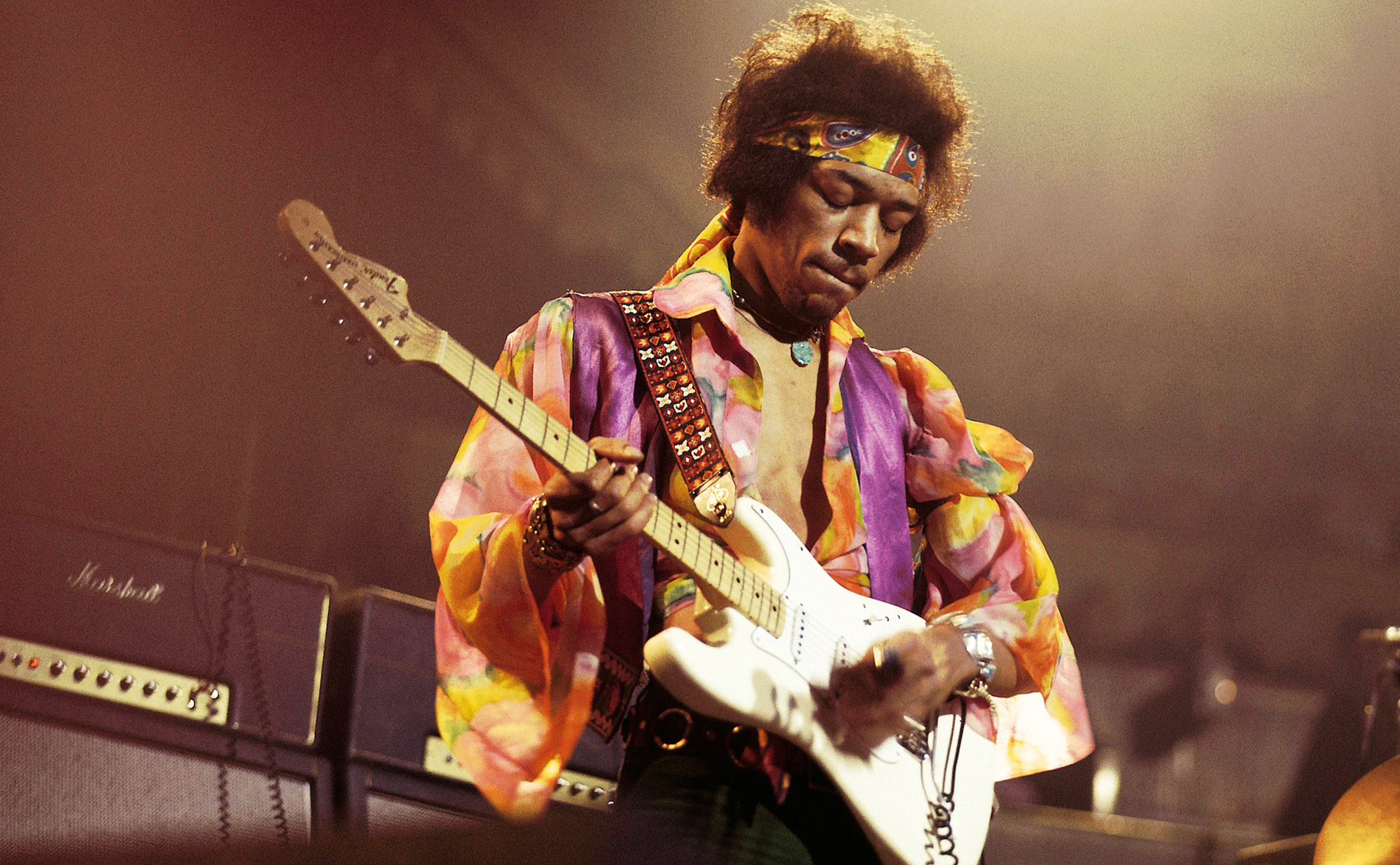
Photo- David Redfern/Redferns, Getty Images
Jimi Hendrix: Electric Guitar Virtuoso
Revolutionizing rock with feedback, flair, and fiery fretwork, Hendrix turned the electric guitar into an instrument of pure expression.
21 July 2025
In the psychedelic storm of the 1960s, where peace, rebellion, and revolution echoed through every chord, one figure stood alone—Jimi Hendrix, a left-handed guitarist from Seattle who would turn the instrument into something it had never been before: a weapon of sound, soul, and transcendence.
Long before Hendrix set guitars ablaze on stage, he was quietly absorbing everything from blues and R&B to rock and soul. Raised on a steady diet of B.B. King, Muddy Waters, and Little Richard (whose band he once toured with), Hendrix internalised these roots before exploding onto the scene in 1967 with The Jimi Hendrix Experience.
That year’s debut album, Are You Experienced, felt like it arrived from another planet. Songs like “Purple Haze,” “Hey Joe,” and “Manic Depression” introduced audiences to a guitarist who bent physics, tone, and time itself. Using distortion, wah-wah pedals, and studio wizardry, Hendrix created music that was both chaotic and celestial. But his power wasn’t just in effects—it was in emotion. Each solo felt like a scream, a prayer, a love letter to the universe.
What truly set Hendrix apart wasn’t just skill—it was imagination. His landmark performance at Monterey Pop Festival (1967) wasn’t just a breakout—it was a cultural detonation. Ending his set by lighting his guitar on fire, kneeling over it like a ritual sacrifice, Hendrix didn’t just play the instrument—he became it.
And then came Woodstock (1969). Hendrix closed out the era-defining festival with a haunting, feedback-laced rendition of “The Star-Spangled Banner.” Through that guitar—wailing sirens, bombs, cries of war and resistance—he transformed a national anthem into a sonic protest against the Vietnam War: no words, just six strings and unfiltered truth.
Behind the theatrics was a deeply spiritual and sensitive soul. Hendrix spoke of music as cosmic energy and often alluded to the universe in his lyrics, as seen in songs such as “Third Stone from the Sun,” “Bold as Love,” and “Voodoo Child (Slight Return).” His songs were galaxies, bending genre boundaries between rock, blues, funk, and psychedelia.
In a white-dominated rock landscape, Hendrix was also a powerful Black icon. He wasn’t overtly political in interviews, but simply being Hendrix—loud, proud, and unlike anything mainstream America had seen—was radical. His fashion, sound, and persona oozed Afrofuturism and freedom.
Tragically, Hendrix’s career was as brief as it was bright. He passed away in 1970 at the age of 27, leaving behind only a handful of studio albums. And yet, his impact is immeasurable. Modern guitarists—from Prince to John Frusciante to St. Vincent—cite him as a key influence. Even decades later, Hendrix’s recordings still sound fresh, alien, alive.
Jimi Hendrix didn’t just master the electric guitar. He redefined what music could be. In his hands, it wasn’t just an instrument—it was a portal. A firestorm. A soul set free.