Album Cover Courtesy of Atlantic Recording Corp
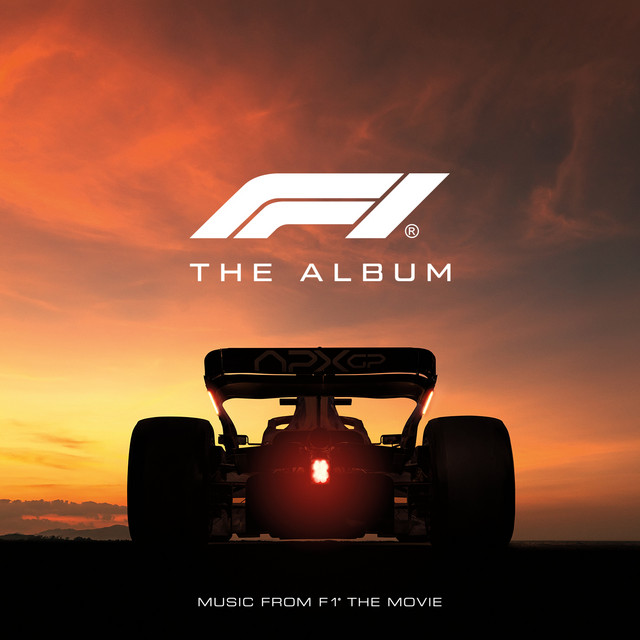
Rhythm Reviews: The Hans Zimmer Effect on the F1 Movie Soundtrack
In the high-octane Formula One movie, Hans Zimmer offers his characteristic sonic velocity to convey racing's speed, emotion, and mythology.
9 July 2025
Few composers are better qualified to translate action into music than Hans Zimmer. Zimmer's distinctive blend of synth sounds, booming percussion, and cinematic grandeur elevates scenes into experiences rather than just scoring them. And in the most recent Formula One film, his music becomes as important to the tale as the engines, the asphalt, and the adrenaline.
The F1 picture (probably set in a dramatised environment of modern racing, but nevertheless evoking the grit of past greats such as Rush) includes more than just high-speed chases and pit lane politics. It's a character-driven journey, and Zimmer's sound evolves with it—from intimate and internal to explosive and external.
The Language of Speed: Rhythm as Velocity
Zimmer has always been a master at rhythmic storytelling. In Formula One, the tempo of his score reflects the push and pull of the race itself. Synth arpeggios, heartbeat-like pulsations, and staccato string hits evoke the stress and focus of a motorist at full throttle. Percussive electronics highlight moments throughout the track, mirroring the staccato flicks of gear shifts and the hypnotic drone of tire rotation.
Zimmer utilises modular synths and sub-bass pulses to create intensity during pivotal racing passages, a technique he employed in Dunkirk and Inception. These moments have a mechanical, almost industrial feel, with the audience's heartbeat matching the rpm of the V6 turbo-hybrid engines. It's not simply music; it's momentum.
Orchestral Humanity in a Machine World
What makes Zimmer's F1 score truly memorable, however, is more than just the tension and thrills. It's the pauses between the turmoil. Zimmer recognises that beneath every helmet is a human tale. For character arcs, whether it's a beginner learning the ropes or a veteran nearing the end, Zimmer employs sad piano motifs, soaring string harmonies, and the occasional choral swell to raise emotional stakes without resorting to sensationalism.
Long-time Zimmer fans will recognise a familiar pattern here: the emotive minor chord progression over lush strings, which he employed to great effect in Interstellar and The Thin Red Line. In the F1 environment, these situations highlight loss, strain, legacy, and even ego, providing richness to the drivers' stories.
Stylistic DNA: Between Human and Machine
Zimmer has always been interested in the tension between organic and synthetic. In F1, this duality is important. The composer experiments with analogue warmth and digital coldness, utilising classic synth pads from the 1980s (think Days of Thunder) alongside current filmic brass and clockwork-like percussion. It pays homage to the sport's past while still including a futuristic element.
Consider it neo-classical meets industrial techno—a score that feels equally at home in a cathedral or a McLaren cockpit. It's a combination of the sacred and the powerful.
Sonic Branding and The Zimmer Signature
Let's not forget that Zimmer doesn't just soundtrack pictures; he creates universes. F1 will include recognisable recurrent motifs. Just as the Dark Knight had a two-note Batman identity and Gladiator had a sorrowful primary theme, F1 had leitmotifs—specific tunes for rivals, victory, and personal reckoning.
A standout moment? The crescendo before the final lap, where Zimmer expertly trims the orchestration, leaving behind a haunting ambient note, then crashing into a full symphonic roar as the checkered flag waves. It makes your spine tingle.
Beyond a musical score—it's a ride.
Hans Zimmer has done what he does well by imbuing a film about movement with emotional depth. In Formula One, the music doesn't just accompany the race; it becomes it. His music consists of the sound of grit beneath the nail, sweat behind the visor, and legacy burning in the exhaust.
Zimmer transforms Formula One into a symphony of suspense, triumph, and sorrow. The consequence is a sonic adrenaline rush that lasts long after the engine stops.
YOU MAY ALSO LIKE