


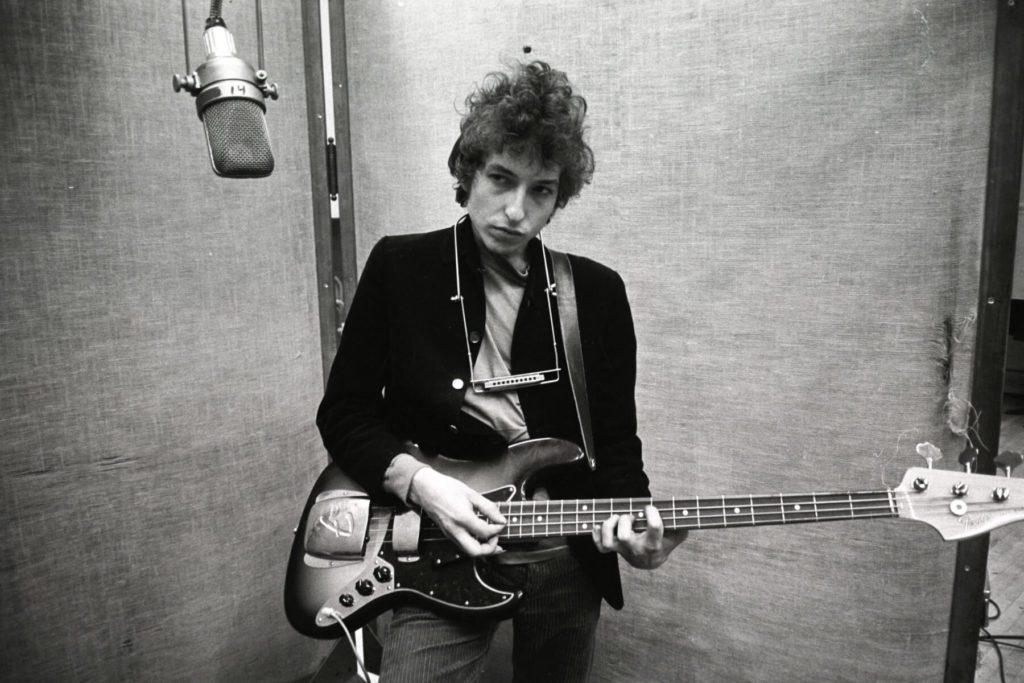
Photo- Bettmann/Getty Images
70s Folk Rock Revival: The Legacy of Bob Dylan
Bob Dylan's songs of the 1960s made him a voice of a generation, while his controversial embrace of electric instruments challenged the boundaries of folk music.
3 June 2026
Bob Dylan had already revolutionised popular music by the time the 1970s rolled around. But instead of focusing on his accomplishments, Dylan came into the new decade with a fresh creative vision that would influence the folk rock renaissance of the 1970s and serve as an inspiration to innumerable performers who came after. Dylan began to stray from the overt political criticism that characterised most of his earlier work in the early 1970s. Rather, he adopted a more thoughtful and intimate approach to songwriting. A songwriter concerned with relationships, ordinary experiences, and introspection was evident in albums like New Morning (1970) and Planet Waves (1974). These records demonstrated Dylan's capacity to change without losing his unique voice, even though they lacked the protest-driven immediacy of his earlier work.
Blood on the Tracks (1975) is arguably the record that best captures Dylan's influence on the decade. The album, widely considered one of the best singer-songwriter albums ever made, turned personal anguish into a beautiful narrative. Songs like "Tangled Up in Blue" and "Simple Twist of Fate" showed off Dylan's extraordinary talent for fusing emotional honesty with intricate storytelling. A new generation of folk rock musicians who aimed to blend literary lyricism with approachable tunes saw the record as a model.
Many of the roots Dylan had laid throughout the preceding decade served as the basis for the folk rock revival of the 1970s. Artists like Bruce Springsteen, Neil Young, Jackson Browne, and Joni Mitchell expanded the emotional and musical potential of serious songwriting while continuing the tradition. Their willingness to approach popular music as a serious artistic medium capable of examining deep human situations was another way that Dylan's influence was evident, in addition to their lyrics.
Dylan's dedication to authenticity was one of his greatest gifts to the decade. Dylan continued to concentrate on songwriting in an era increasingly dominated by arena-sized productions and commercial rock spectacles. His music proved that technical mastery and intricate arrangements were not necessary for a strong song. Honesty, creativity, and the capacity to establish a very intimate connection with listeners were what were important.
Dylan's enormous touring effort, the Rolling Thunder Revue, which started in 1975, may have been the best example of this idea. Instead of portraying himself as a far-off rock star, he crafted a personal and dramatic musical experience that conflated performance art, concert, and social gathering. The tour introduced Dylan's music to new listeners and turned into a celebration of the collaborative spirit of folk music.
Throughout the decade, Dylan kept pushing the frontiers of music. He created a style that defied simple classification by incorporating elements of folk, country, rock, blues, and traditional American music. Rich instrumentation and narrative on albums like Desire (1976) increased the potential of folk rock. Songs like "Hurricane" demonstrated Dylan's ability to address political issues while venturing into uncharted artistic terrain by fusing social critique with cinematic narrative.
Dylan's impact was felt throughout the larger music scene in addition to his own records. Folk, country, rock, and punk musicians were all influenced by his songs. His ability to take chances, reinvent himself, and put creative development ahead of financial expectations was praised by musicians. The folk rock renaissance of the 1970s was, in many respects, a continuation of Dylan's lifetime dedication to artistic inquiry rather than just a return to acoustic roots.
Bob Dylan's influence is still essential to comprehending the development of folk rock today. He proved that popular music may be accessible without compromising artistic depth, poetic without being arrogant, and intimate without being self-indulgent. His efforts throughout the decade guaranteed that folk rock would continue to be an important force in contemporary music and helped redefine what a composer might do.
Bob Dylan continued to be the driving force behind the folk rock resurgence of the 1970s, despite the presence of several voices. He proceeded to mould a generation's sound with his restless inventiveness and unshakeable commitment to songwriting, leaving an impact that is still felt in modern music.


